Jake's Encounter with the Narrator at the Pub
I'm Thinking of Ending ThingsJake's Encounter with The narrator at the Pub is a small meeting whose importance grows in retrospect. Jake manages to leave his room and join other people, and The narrator responds to him warmly; yet he cannot hand her his number. They never meet again. The episode ends not with a relationship begun but with Jake writing about the possibility of one, turning a brief encounter into a private story of what did not happen.
Setting and First Contact
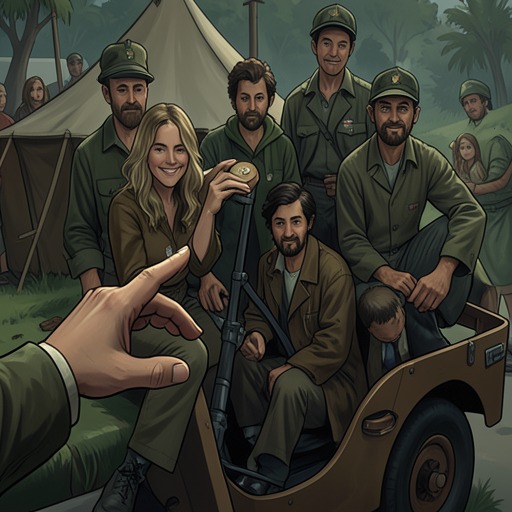
That night, long ago, Jake is at the Pub while a song plays and his team discusses questions. He listens without speaking, but silence does not mean he is absent: he remains engaged and may even be enjoying himself. He takes small sips of beer and intermittently sniffs the back of his hand, an absentminded tick that appears when he concentrates or relaxes. The setting matters because relaxation among other people is rare for him. Getting out of his room and into the Pub is already difficult, and the effort makes his presence there significant before The narrator speaks to him.
The narrator sits beside Jake and does not move away. She is described as pretty, talkative, laughing often, and at ease with herself; Jake remembers her kind eyes. She smiles at him, and the memory insists on the certainty of that small exchange: he takes the smile as real, smiles back, and wants desperately to say hello. The group conversation gives her an opening. She tells them they are doing pretty well, and Jake answers by raising his beer glass and joking that they are helpfully fortified. It is the first thing she says to him. Their initial contact is modest and shared with the group, but it gives Jake a brief, concrete sign that conversation between them is possible.
The Uncompleted Gesture
They talk a little more, and Jake writes his number on a napkin because he wants to give it to The narrator. The number is ready; the gesture is not. He cannot pass it to her, and he does not. That distinction defines the encounter: possibility has taken material form in the napkin, but it never crosses the space between them. The episode offers no rejection or conflict between the two. Its immediate obstacle is Jake's inability to act on what he wants.
Afterward, he hopes that chance will bring them together again. A second meeting, he imagines, might be easier and might allow their connection to progress. But he does not get that chance. The narration makes the difference between waiting and acting explicit: the encounter will not continue by itself, and Jake would have had to make it happen. The hope of a future meeting therefore remains attached to the action he could not take at the Pub. The unoffered number is not merely a missed exchange of contact details; it marks the point at which a real possibility becomes an imagined one.
The Life Imagined Afterward
Years later, Jake tests the missed encounter through a chain of counterfactuals. If The narrator had his number, might she have called? Might they have spoken on the phone, met again, or gone on a date? He wonders whether he would have stayed at the lab, whether they might have taken a road trip together, and whether she might have kissed him. He imagines a relationship involving two people rather than one, and a visit to the house where he was raised. Even the small prospect of stopping for ice cream on the way home becomes part of the imagined future, whatever the weather.
These possibilities do not become claims about what would have happened. The memory leaves their outcome uncertain, answering its own accumulation of alternatives with yes, no, or perhaps, before insisting that none of them occurred. The counterfactuals give the meeting emotional scale without changing its facts: Jake and The narrator talked briefly, and the imagined road trip, kiss, relationship, and ice-cream stop remained unrealized. The burden of that unrealized future is not assigned to her. The passage recognizes that she might soon have forgotten the first, brief meeting, while Jake continued to carry it.
Memory, Writing, and Significance
The recollection shifts among he, she, we, and me. That movement unsettles the boundary between Jake remembering The narrator and a voice that folds the two together. It does not alter the basic sequence of events, but it changes how the memory is presented: an encounter between two people becomes entangled with the narrator's language of shared identity. The episode's intimate importance is therefore set against its outward scale. It was, the passage acknowledges, inconsequential to The narrator and everyone else; its exception is the person, or merged voice, that continued to remember it.
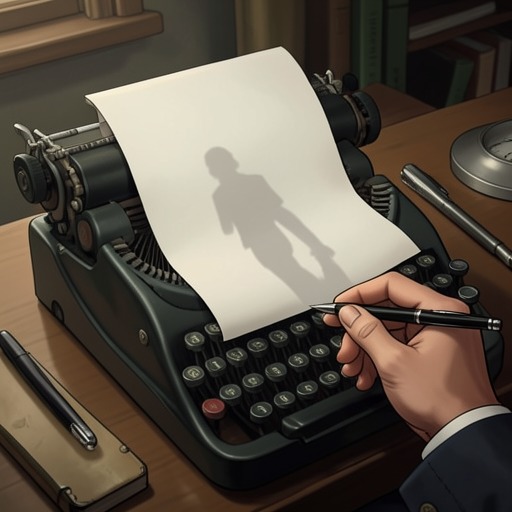
Jake writes about The narrator and about the two of them as an imagined us. In this account, thought and writing preserve a relationship that action never established. The napkin records the possibility of contact; the later writing gives form to a possible shared life. Neither can make the meeting continue in reality, and the passage does not claim that it did. Instead, the Pub encounter becomes consequential through its afterlife in memory: a brief smile and an unpassed number are made to bear the weight of all the futures Jake can imagine, while the text keeps the boundary between those futures and what actually happened in view.